 Add to Chrome
 Add to Firefox
 Add to Edge
NLOS positioning
Papers and Code
Fronthaul-Efficient Distributed Cooperative 3D Positioning with Quantized Latent CSI Embeddings
Jan 31, 2026
High-precision three-dimensional (3D) positioning in dense urban non-line-of-sight (NLOS) environments benefits significantly from cooperation among multiple distributed base stations (BSs). However, forwarding raw CSI from multiple BSs to a central unit (CU) incurs prohibitive fronthaul overhead, which limits scalable cooperative positioning in practice. This paper proposes a learning-based edge-cloud cooperative positioning framework under limited-capacity fronthaul constraints. In the proposed architecture, a neural network is deployed at each BS to compress the locally estimated CSI into a quantized representation subject to a fixed fronthaul payload. The quantized CSI is transmitted to the CU, which performs cooperative 3D positioning by jointly processing the compressed CSI received from multiple BSs. The proposed framework adopts a two-stage training strategy consisting of self-supervised local training at the BSs and end-to-end joint training for positioning at the CU. Simulation results based on a 3.5~GHz 5G NR compliant urban ray-tracing scenario with six BSs and 20~MHz bandwidth show that the proposed method achieves a mean 3D positioning error of 0.48~m and a 90th-percentile error of 0.83~m, while reducing the fronthaul payload to 6.25% of lossless CSI forwarding. The achieved performance is close to that of cooperative positioning with full CSI exchange.

Integrated Channel Estimation and Sensing for Near-Field ELAA Systems
Jan 26, 2026In this paper, we study the problem of uplink channel estimation for near-filed orthogonal frequency division multiplexing (OFDM) systems, where a base station (BS), equipped with an extremely large-scale antenna array (ELAA), serves multiple users over the same time-frequency resource block. A non-orthogonal pilot transmission scheme is considered to accommodate a larger number of users that can be supported by ELAA systems without incurring an excessive amount of training overhead. To facilitate efficient multi-user channel estimation, we express the received signal as a third-order low-rank tensor, which admits a canonical polyadic decomposition (CPD) model for line-of-sight (LoS) scenarios and a block term decomposition (BTD) model for non-line-of-sight (NLoS) scenarios. An alternating least squares (ALS) algorithm and a non-linear least squares (NLS) algorithm are employed to perform CPD and BTD, respectively. Channel parameters are then efficiently extracted from the recovered factor matrices. By exploiting the geometry of the propagation paths in the estimated channel, users' positions can be precisely determined in LoS scenarios. Moreover, our uniqueness analysis shows that the proposed tensor-based joint multi-user channel estimation framework is effective even when the number of pilot symbols is much smaller than the number of users, revealing its potential in training overhead reduction. Simulation results demonstrate that the proposed method achieves markedly higher channel estimation accuracy than compressed sensing (CS)-based approaches.
Sidelink Positioning: Standardization Advancements, Challenges and Opportunities
Dec 31, 2025With the integration of cellular networks in vertical industries that demand precise location information, such as vehicle-to-everything (V2X), public safety, and Industrial Internet of Things (IIoT), positioning has become an imperative component for future wireless networks. By exploiting a wider spectrum, multiple antennas and flexible architectures, cellular positioning achieves ever-increasing positioning accuracy. Still, it faces fundamental performance degradation when the distance between user equipment (UE) and the base station (BS) is large or in non-line-of-sight (NLoS) scenarios. To this end, the 3rd generation partnership project (3GPP) Rel-18 proposes to standardize sidelink (SL) positioning, which provides unique opportunities to extend the positioning coverage via direct positioning signaling between UEs. Despite the standardization advancements, the capability of SL positioning is controversial, especially how much spectrum is required to achieve the positioning accuracy defined in 3GPP. To this end, this article summarizes the latest standardization advancements of 3GPP on SL positioning comprehensively, covering a) network architecture; b) positioning types; and c) performance requirements. The capability of SL positioning using various positioning methods under different imperfect factors is evaluated and discussed in-depth. Finally, according to the evolution of SL in 3GPP Rel-19, we discuss the possible research directions and challenges of SL positioning.
UNILocPro: Unified Localization Integrating Model-Based Geometry and Channel Charting
Oct 31, 2025In this paper, we propose a unified localization framework (called UNILocPro) that integrates model-based localization and channel charting (CC) for mixed line-of-sight (LoS)/non-line-of-sight (NLoS) scenarios. Specifically, based on LoS/NLoS identification, an adaptive activation between the model-based and CC-based methods is conducted. Aiming for unsupervised learning, information obtained from the model-based method is utilized to train the CC model, where a pairwise distance loss (involving a new dissimilarity metric design), a triplet loss (if timestamps are available), a LoS-based loss, and an optimal transport (OT)-based loss are jointly employed such that the global geometry can be well preserved. To reduce the training complexity of UNILocPro, we propose a low-complexity implementation (called UNILoc), where the CC model is trained with self-generated labels produced by a single pre-training OT transformation, which avoids iterative Sinkhorn updates involved in the OT-based loss computation. Extensive numerical experiments demonstrate that the proposed unified frameworks achieve significantly improved positioning accuracy compared to both model-based and CC-based methods. Notably, UNILocPro with timestamps attains performance on par with fully-supervised fingerprinting despite operating without labelled training data. It is also shown that the low-complexity UNILoc can substantially reduce training complexity with only marginal performance degradation.
Two stage GNSS outlier detection for factor graph optimization based GNSS-RTK/INS/odometer fusion
Oct 01, 2025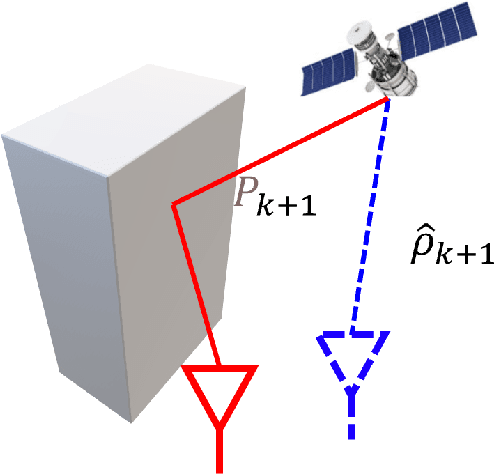
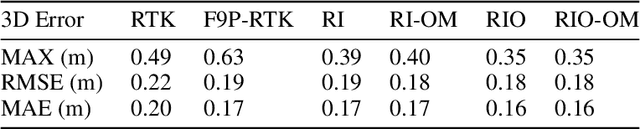
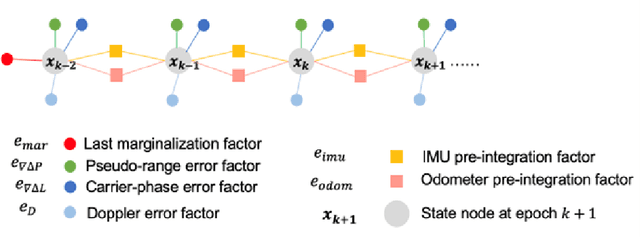
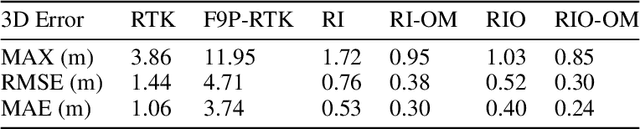
Reliable GNSS positioning in complex environments remains a critical challenge due to non-line-of-sight (NLOS) propagation, multipath effects, and frequent signal blockages. These effects can easily introduce large outliers into the raw pseudo-range measurements, which significantly degrade the performance of global navigation satellite system (GNSS) real-time kinematic (RTK) positioning and limit the effectiveness of tightly coupled GNSS-based integrated navigation system. To address this issue, we propose a two-stage outlier detection method and apply the method in a tightly coupled GNSS-RTK, inertial navigation system (INS), and odometer integration based on factor graph optimization (FGO). In the first stage, Doppler measurements are employed to detect pseudo-range outliers in a GNSS-only manner, since Doppler is less sensitive to multipath and NLOS effects compared with pseudo-range, making it a more stable reference for detecting sudden inconsistencies. In the second stage, pre-integrated inertial measurement units (IMU) and odometer constraints are used to generate predicted double-difference pseudo-range measurements, which enable a more refined identification and rejection of remaining outliers. By combining these two complementary stages, the system achieves improved robustness against both gross pseudo-range errors and degraded satellite measuring quality. The experimental results demonstrate that the two-stage detection framework significantly reduces the impact of pseudo-range outliers, and leads to improved positioning accuracy and consistency compared with representative baseline approaches. In the deep urban canyon test, the outlier mitigation method has limits the RMSE of GNSS-RTK/INS/odometer fusion from 0.52 m to 0.30 m, with 42.3% improvement.
FAS-ARIS: Turning Multipath Challenges Into Localization Opportunities
Sep 15, 2025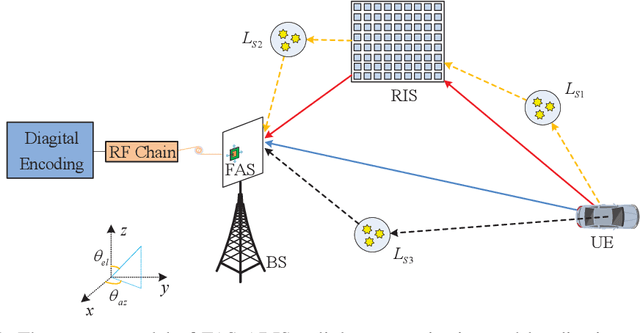
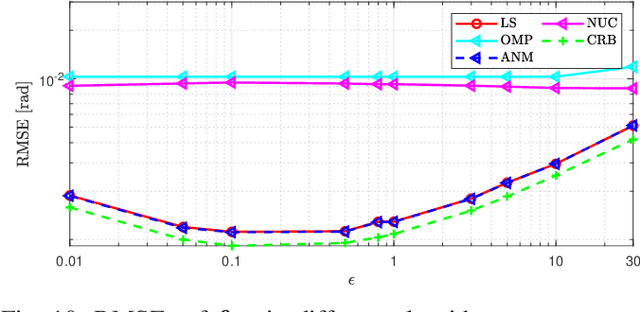
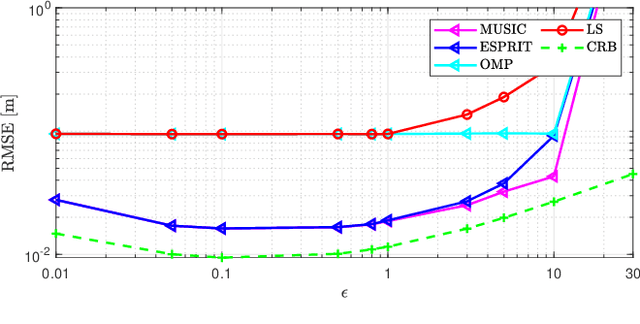
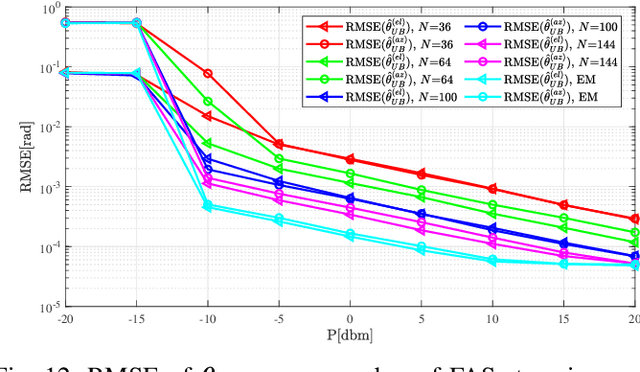
Traditional single-input single-output (SISO) systems face fundamental limitations in achieving accurate three-dimensional (3D) localization due to limited spatial degrees of freedom (DoF) and the adverse impact of multipath propagation. This paper proposes a novel fluid antenna system (FAS)-active reconfigurable intelligent surface (ARIS) framework that transforms multipath effects from a hindrance into a resource for enhanced localization. By synergistically combining the signal amplification capabilities of ARIS with the spatial diversity enabled by FAS, the proposed system achieves robust 3D user equipment (UE) positioning -- without relying on auxiliary information such as time-of-arrival (ToA) or frequency diversity. The system exploits both line-of-sight (LoS) and non-line-of-sight (NLoS) components through a tailored signal decoupling strategy. We design novel UE pilot sequences and ARIS phase configurations to effectively separate LoS and NLoS channels, enabling independent parameter estimation. A multi-stage estimation algorithm is then applied: the multiple signal classification (MUSIC) algorithm estimates angle-of-arrival (AoA) from the direct path, while maximum likelihood estimation with interior-point refinement recovers cascaded channel parameters from the reflected path. Finally, geometric triangulation using least-squares estimation determines the UE's 3D position based on the extracted AoA information. Comprehensive performance analysis, including the derivation of Cram\'{e}r-Rao bounds for both channel and position estimation, establishes theoretical benchmarks. Simulation results confirm that the proposed FAS-ARIS framework achieves near-optimal localization accuracy while maintaining robustness in rich multipath environments -- effectively turning conventional localization challenges into advantages.
Joint Communication and Indoor Positioning Based on Visible Light in the Presence of Dimming
Aug 06, 2025This paper proposes a joint communication and indoor positioning (JCP) system based on visible light communication (VLC) designed for high-precision indoor environments. The framework supports 2D and 3D positioning using received signal strength (RSS) from pilot transmissions, enhanced by the radical axis theorem to improve accuracy under measurement uncertainties. Communication is achieved using spatial modulation (SM) with M-ary pulse amplitude modulation (PAM), where data is conveyed through the modulation symbol and the active light-emitting diode (LED) index, improving spectral efficiency while maintaining low complexity. A pilot-aided least squares (LS) estimator is employed for joint channel and dimming coefficient estimation, enabling robust symbol detection in multipath environments characterized by both line-of-sight (LOS) and diffuse non-line-of-sight (NLOS) components, modeled using Rician fading. The proposed system incorporates a dimming control mechanism to meet lighting requirements while maintaining reliable communication and positioning performance. Simulation results demonstrate sub-centimeter localization accuracy at high signal-to-noise ratios (SNRs) and bit error rates (BERs) below 10^{-6} for low-order PAM schemes. Additionally, comparative analysis across user locations reveals that positioning and communication performance improve significantly near the geometric center of the LED layout. These findings validate the effectiveness of the proposed system for future 6G indoor networks requiring integrated localization and communication under practical channel conditions.
Channel Charting in Smart Radio Environments
Aug 10, 2025This paper introduces the use of static electromagnetic skins (EMSs) to enable robust device localization via channel charting (CC) in realistic urban environments. We develop a rigorous optimization framework that leverages EMS to enhance channel dissimilarity and spatial fingerprinting, formulating EMS phase profile design as a codebook-based problem targeting the upper quantiles of key embedding metric, localization error, trustworthiness, and continuity. Through 3D ray-traced simulations of a representative city scenario, we demonstrate that optimized EMS configurations, in addition to significant improvement of the average positioning error, reduce the 90th-percentile localization error from over 60 m (no EMS) to less than 25 m, while drastically improving trustworthiness and continuity. To the best of our knowledge, this is the first work to exploit Smart Radio Environment (SRE) with static EMS for enhancing CC, achieving substantial gains in localization performance under challenging None-Line-of-Sight (NLoS) conditions.
Site-Specific Location Calibration and Validation of Ray-Tracing Simulator NYURay at Upper Mid-Band Frequencies
Jul 29, 2025Ray-tracing (RT) simulators are essential for wireless digital twins, enabling accurate site-specific radio channel prediction for next-generation wireless systems. Yet, RT simulation accuracy is often limited by insufficient measurement data and a lack of systematic validation. This paper presents site-specific location calibration and validation of NYURay, NYU's in-house ray tracer, at upper mid-band frequencies (6.75 GHz and 16.95 GHz). We propose a location calibration algorithm that corrects GPS-induced position errors by optimizing transmitter-receiver (TX-RX) locations to align simulated and measured power delay profiles, improving TX-RX location accuracy by 42.3% for line-of-sight (LOS) and 13.5% for non-line-of-sight (NLOS) scenarios. Validation across 18 TX-RX locations shows excellent RT accuracy in path loss prediction, with path loss exponent (PLE) deviations under 0.14. While RT underestimates delay spread and angular spreads, their cumulative distributions remain statistically similar. The validated NYURay advances RT validation and provides reliable channel statistics for 6G deployment.
Dynamical Multimodal Fusion with Mixture-of-Experts for Localizations
Jul 02, 2025Multimodal fingerprinting is a crucial technique to sub-meter 6G integrated sensing and communications (ISAC) localization, but two hurdles block deployment: (i) the contribution each modality makes to the target position varies with the operating conditions such as carrier frequency, and (ii) spatial and fingerprint ambiguities markedly undermine localization accuracy, especially in non-line-of-sight (NLOS) scenarios. To solve these problems, we introduce SCADF-MoE, a spatial-context aware dynamic fusion network built on a soft mixture-of-experts backbone. SCADF-MoE first clusters neighboring points into short trajectories to inject explicit spatial context. Then, it adaptively fuses channel state information, angle of arrival profile, distance, and gain through its learnable MoE router, so that the most reliable cues dominate at each carrier band. The fused representation is fed to a modality-task MoE that simultaneously regresses the coordinates of every vertex in the trajectory and its centroid, thereby exploiting inter-point correlations. Finally, an auxiliary maximum-mean-discrepancy loss enforces expert diversity and mitigates gradient interference, stabilizing multi-task training. On three real urban layouts and three carrier bands (2.6, 6, 28 GHz), the model delivers consistent sub-meter MSE and halves unseen-NLOS error versus the best prior work. To our knowledge, this is the first work that leverages large-scale multimodal MoE for frequency-robust ISAC localization.